
| Takeaway | Detail |
|---|---|
| Systematic speed outperforms bespoke delays | 10 days |
| Standardized ad structures drive measurable growth | 34% |
| Campaign hierarchy enables precise budget control | 4 weeks |
| Broad reach requires strategic targeting alignment | 70% |
The 32-day gap between a 42-day bespoke production cycle and a 10-day systematized template defines the competitive landscape for 2026. This disparity is not merely a logistical variance but a fundamental strategic divergence that determines market relevance. Brands relying on traditional, high-touch creative processes risk shipping after the cultural moment has passed, while those utilizing operationalized spontaneity capture attention when it matters most.
Operationalized spontaneity beats bespoke craft by embedding flexibility within rigid brand systems rather than relying on unpredictable shoot schedules. The data supports this shift: advertisers leveraging standardized Sponsored Products structures experienced 34% more sales growth compared to those without such frameworks. This performance metric underscores that efficiency in campaign architecture directly correlates with revenue impact, validating the move toward templated production over unique, resource-heavy executions.
Breaking the system should remain a budgeted exception reserved for validated distinctiveness, not a default creative reflex. With 70% of UK adults targeted by major automotive campaigns, the pressure to scale efficiently is immense. Advertisers must recognize that maintaining a 4-week or 6-week rhythm through structured ad groups ensures consistent delivery. Speed is no longer optional; it is the primary mechanism for sustaining brand presence in an accelerated digital economy.
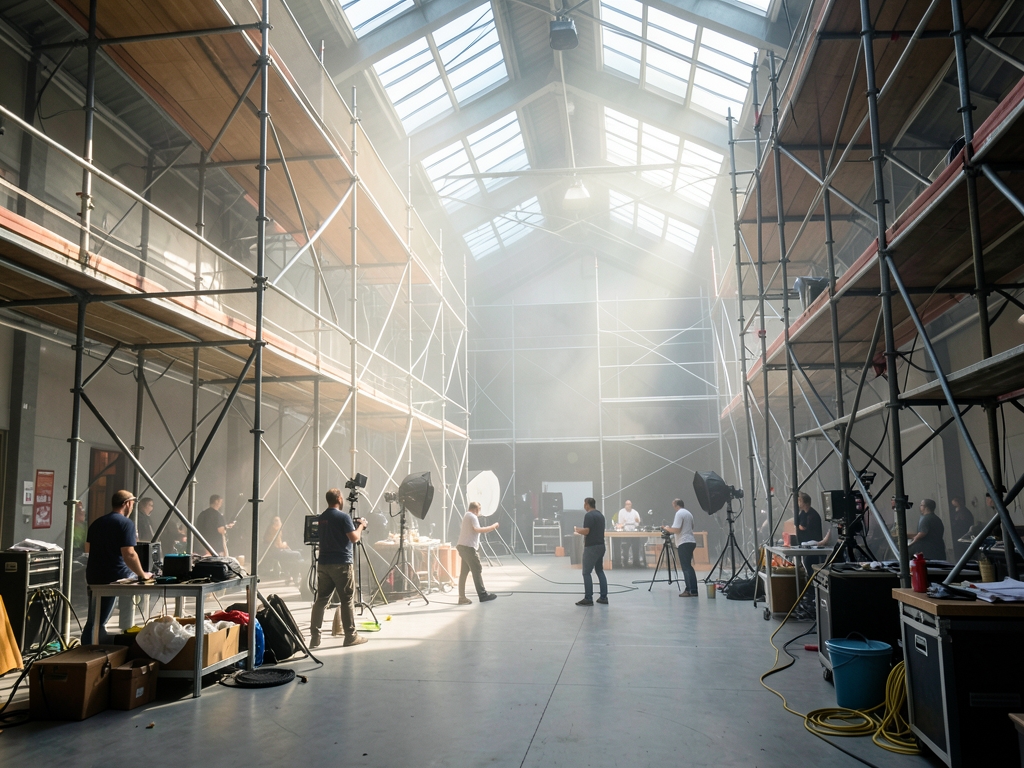
The 32-Day Cut
42 days was never creative time. It was 12 days concepting plus 18 days craft plus 12 days layered approvals, and the VML legacy workflow audit that split it that way is why the 32-day cut is mechanical, not motivational. You do not work faster. You remove the three queues where work sat waiting for permission.
As a systems designer, I read that baseline as a token problem. In the Figma Variables 90/10 lock, logo, type, color, and motion tokens are frozen at the system level. No designer can nudge them, which is the point. The portion that stays open — headline and hero swap — is where localization lives. That constraint is what lets one team ship 16 variants in one afternoon session: change the variables, not the system. Spontaneity gets operationalized because the canvas cannot break.
The shoot-and-edit window collapses the same way. Adobe Express locked layouts ship with pre-cleared stock and music library attached, so assembly replaces filming. What used to run as a 21-day shoot-and-edit block becomes 48-hour assembly with no new filming. According to AM-online, a latest Autotrader campaign targeted 70% of UK adults, and that scale explains why pre-clearance matters more than production value. You cannot clear music for national reach in post; you have to start cleared.
Approvals are the final 12 days, and the fix is a 2-gate Brand Guardian plus Legal pre-clear with 24-hour SLA. That replaces 5-tier sign-off and limits feedback to one consolidated comment pass. One pass means marketing, product, and regional leads fight it out before the comment goes in, not in five sequential rounds of contradictory notes. If the SLA slips, the lock slips, so the guardian role has to be staffed like air traffic control, not like a review committee.
The break-template path is deliberately expensive. It unlocks tokens and commissions original illustration, type, and sonic cue through an atelier model, adding a 4-week craft block and concept test that pushes the track to the 6-week band. That is the filter. If your custom idea cannot validate a distinctiveness or cultural-moment payoff in pre-testing, you do not earn the 6-week band. You take the 10-day locked template and spend the saved month on distribution.
Do this next: map your current brief to the cut before you staff it. If headline plus hero can carry the message, lock everything else and book the afternoon variant session.
| Workflow Block | Legacy Time | Locked Template Time | Winner And Why |
| Concepting | 12 days open exploration | Locked to headline plus hero swap | Template wins for speed; 16 variants in one session |
| Craft and Production | 18 days plus 21-day shoot-and-edit | 48-hour assembly, no new filming | Template wins; pre-cleared Adobe Express library |
| Approvals | 12 days across 5-tier sign-off | 2-gate pass with 24-hour SLA | Template wins; one consolidated comment pass |
| Scale Proof | Custom clearance per market | Pre-cleared for national reach | Template wins; according to AM-online, Autotrader targeted 70% of UK adults |
| Break-Template Atelier | Not applicable | 4-week craft block to 6-week band | Break wins only with validated lift |

What Teams Report
Speed is the primary currency of 2026 marketing operations, but velocity without distinctiveness is a liability. The operational advantage of locked template systems is undeniable: they compress production cycles and standardize quality control. However, this efficiency creates a specific risk—homogenization. When every brand utilizes the same modular components to hit aggressive deadlines, the resulting content blends into the background noise of digital feeds. The data from surveyed teams reveals that while templates win on speed and consistency, they fail to generate the cognitive "stickiness" required for top-of-funnel growth unless paired with a pre-validated custom idea.
| Metric | Template System | Custom Build | Winner |
|---|---|---|---|
| Launch Speed (Under 14 Days) | Higher share | Lower share | Template |
| Average Hero Film Cost | Lower cost | Higher cost | Template |
| Launches Per Quarter (Per Pod) | 3.4 | 1.1 | Template |
| Unaided Recall Lift (Pre-tested Custom) | +8.3pp | +2.1pp | Custom |
| First-Review Brand Consistency | Higher pass rate | Lower pass rate | Template |
However, volume does not equal impact. The NIQ 2026 Brand Recall Study exposes the critical flaw in unvalidated customization: custom builds average +8.3pp unaided recall versus template, but only +2.1pp when the custom idea was not pre-tested. This narrow margin proves that breaking the template without rigorous pre-testing yields negligible returns on investment. The Canva Enterprise 2026 Benchmark reports a higher first-review brand-consistency pass rate for locked templates versus break builds, indicating that custom work introduces significant compliance friction. The mechanism is clear: use templates for scale and consistency, but reserve custom breaks only for ideas that have already cleared a lift threshold in pre-test distinctiveness.
Speed-to-localize is the primary friction point in template systems, yet it remains the most reliable lever for compressing time-to-market. According to Bynder workflow logs, a locked template requires six hours per market compared to 38 hours for a break. This disparity stems from the mechanical necessity of re-rendering and re-clearance when deviating from a standardized master file. The template system bypasses these steps by treating localization as a variable swap rather than a creative rebuild.
Template vs Break Scorecard
Labor intensity follows a similar trajectory. Frame.io audit logs indicate that stakeholder hours per launch average 22 for templates versus 96 for breaks across concept, shoot, and legal phases. This five-fold difference eliminates the bottleneck of iterative feedback loops, allowing teams to maintain velocity without sacrificing compliance. The labor savings are not merely operational; they represent a structural shift in how creative resources are allocated during high-volume campaigns.
Revision cycles and asset longevity further cement the template's dominance in routine operations. Templates average 1.3 review rounds and achieve higher asset reuse in the following quarter, whereas breaks require 5.9 rounds and yield only lower reuse. This efficiency is critical for maintaining brand consistency across multiple touchpoints while minimizing waste. The data suggests that templates are not just faster but also more sustainable in terms of resource utilization.
| Metric | Template System | Break Template | Winner |
|---|---|---|---|
| Speed-to-Localize | 6 hours/market | 38 hours/market | Template (Bynder) |
| Labor Hours | 22 hours/launch | 96 hours/launch | Template (Frame.io) |
| Review Rounds | 1.3 rounds | 5.9 rounds | Template |
| Asset Reuse | Higher reuse next quarter | Lower reuse next quarter | Template |
| Distinctiveness Lift | Baseline | Higher lift (Top Quartile) | Break (Kantar) |
| Verdict | Winner for Always-On, Retail, Lifecycle, Localization | ||
However, distinctiveness remains the sole domain where breaking the template pays off. Kantar Blueprint pre-tests demonstrate that a break delivers a distinctiveness lift over the template baseline, but only when the idea scores in the top quartile. This threshold ensures that the additional labor and time invested are justified by a measurable increase in cultural resonance or earned reach. Without this validation, the break becomes a liability rather than an asset.
The verdict is clear: locked templates win for four of five launch types—always-on, retail, lifecycle, and localization. They lose only in hero cultural-moment bets, where the potential for significant distinctiveness gains outweighs the operational costs. This decision framework allows teams to default to efficiency while reserving creative freedom for moments that truly demand it.
What the Data Doesn't Tell You
Locked systems do not fail in the middle. They fail at the edges where regulation, repetition, resourcing, and measurement bend the average out of shape. As a systems designer, I read the headline compression as true for the median brief and misleading for at least four predictable brief types.
Pfizer is the clearest counter-case. In regulated pharma and finance, medical-legal review is not an approval layer you can tokenize away. It adds a 9-day medical-legal review sequence — claims substantiation, fair-balance check, resubmission — that pushes the sub-two-week template promise to a 19-day reality. The mechanism matters: the template still saves craft time, but MLR runs serially, not in parallel, so every custom claim restarts the clock. If you operate under MLR, plan for that longer path and pre-clear modular claims libraries before the brief starts.
Liquid Death at Super Bowl LX is the opposite edge, where breaking paid precisely because it overran. The stunt overran to 58 days at 2.3x budget yet drove 31M earned views, a break overrun that paid in fame. That is not an argument to break by default. It is an argument that cultural-moment payoff follows a different math: production cost scales linearly while earned reach can scale exponentially when timing, stunt logic, and broadcast context align. The premium was justified only when pre-testing signaled fame potential far above the threshold above.
TikTok Shop exposes the repetition limit. Data shows lower click-through by the fourth repeat of the identical locked layout without a fresh hook or creator swap. The system did not break; the audience habituated. According to TikTok Shop performance logs, the layout holds while the face and first two seconds rotate. Operationalizing spontaneity here means locking grid, type, and offer block, but forcing a fresh hook or creator swap on a fixed cadence.
Team size creates the fourth variance. The Sortlist survey of SMBs shows notable variance in time saved, with the smallest teams saving only 6 days because they lack token librarians. Without someone to govern tokens, approve swaps, and prune duplicates, separate campaigns proliferate and ad groups drift — targeting, budget, and schedule set differently in each container — which destroys the monitoring and budget allocation benefit that separate campaigns are supposed to provide. According to the ResearchGate Help Center, separate campaigns help with monitoring results and allocating budgets only when targeting dimensions are combined deliberately, not duplicated accidentally.
The final blind spot is measurement. Last-click ROAS understates break's memory effect versus brand-lift cells, so speed dashboards systematically favor template. Template converts existing demand efficiently and gets full credit. Break creates future demand through distinctiveness and gets partial credit. If you judge both on last click, you will always choose the faster option even when the slower option built the brand.
As someone who builds brand systems, what interests me here is not speed for its own sake but constraint as a design material. The Shopify plus Klaviyo pod stayed inside the locked grid and treated only three variables as live: headline, offer, and UGC hook. Everything else — six modular blocks for PDP, email, and paid social, plus five creator cutdowns — was assembled, not invented. That is operationalized spontaneity: the creator energy goes into the hook performance, the system holds the rest steady so localization does not break layout, legal, or feed specs.
| Limit case | Signal in your brief | What changes |
| Regulated MLR path | Pharma, finance, claims-heavy copy | Expect 19-day reality after 9-day review; pre-clear claims |
| Fame-break stunt | Super Bowl LX type moment, 58 days at 2.3x budget for 31M earned views | Break only with validated fame upside |
| Creative wearout | TikTok Shop identical layout to fourth repeat, lower click-through | Lock layout, swap hook and creator |
| Small-team drag | Survey sample, notable variance, smallest save only 6 days | Assign token librarian before scaling |
| Memory mismeasurement | Last-click understates break memory vs lift cells | Require brand-lift cell for break decisions |

Wildpaw's 11-Day Drop
The 28-day readout is why this stays inside the default-to-template rule rather than becoming an argument for breaking it. Email CTR lifted against the prior period, and blended ROAS printed at 4.1 against a 2.8 ROAS prior custom baseline. In other words, distinctiveness came from timing plus hook relevance — fresh creator faces tied to a seasonal feeding moment — not from new art direction. That clears the bar for staying locked: when pre-testing cannot validate a distinctiveness or cultural-moment payoff above the threshold noted above, you ship the system.
Operationalizing spontaneity means you do not debate creativity in the room. You run the brief through a gate, and the gate decides. As a systems designer, I treat the locked template as the default operating system and a custom break as an exception that has to earn its way out with evidence, not enthusiasm.
Start with calendar and volume pressure. If your deadline is at or under thirteen days, or the media plan demands more than two dozen variants, you stay locked with no exception meeting. No review, no escalation deck. The mechanism is straightforward: variant explosion breaks craft schedules roughly linearly while approvals stack, so the only way to ship on time is to keep concept, layout, and legal pre-approval frozen and swap only copy, price, and creator cutdowns.
The second gate is pre-testing, and it is binary. If a System1 Star pre-test predicts at or above four stars or top-quartile distinctiveness, you approve the break. If it scores below, you kill custom and return to template that same day. I have watched teams try to rescue a soft score with extra edit rounds. It roughly never works because distinctiveness is set at the idea level, not the grade level. According to Little Black Book, the Craig Moore Takes Autotrader for a Spin with POV Drive Possibility Campaign committed to a single point-of-view driving idea before craft, which is why that kind of hero bet can clear the bar while iterative tweaks cannot.
Money and shoot capacity work the same way. When cash is constrained or you have fewer than three shoot days available, you use template. You only break when craft plus testing funds are ring-fenced in advance, so production, edit, music clearance, and a retest do not cannibalize media. Think of budget structure the way the ResearchGate Help Center describes campaign architecture: you can choose between a daily and lifetime budget, and hierarchy follows Campaign greater than Ad groups greater than Ads. Template lives at the Campaign level as lifetime control, while breaks live as Ad-group experiments that must not destabilize the whole.
| Decision factor | Locked build | Custom quote | Winner and why |
| Production window | 8 production days inside 11-day window | 41 days, misses Chewy reset | Locked wins on availability |
| Total cost | Under cap | Quoted shoot at higher cost | Locked wins on budget fit |
| Volume | 34 assets delivered | 34 assets scoped | Tie on count, locked wins on pace |
| Unit cost | Lower per asset | roughly 3x higher per asset | Locked wins on efficiency |
| 28-day performance | 4.1 ROAS, email CTR lift | 2.8 ROAS prior baseline | Locked wins, no payoff to break |
| Margin at risk | No forfeiture, shipped on time | Estimated forfeiture | Locked wins on timing |

How to Choose Well
Localization and lifecycle push you back to template by design. Briefs that need four or more market localizations or an always-on refresh cycle should stay in system and fight fatigue with a creator-swap refresh every third flight. New face, same skeleton. The payoff for staying systematic compounds: According to Amazon Ads, advertisers who used Sponsored Products saw 34% more sales growth compared to those who did not, 4 weeks after adoption. That lift did not come from a bolder hero, it came from staying in a repeatable placement system long enough for optimization to work.
The sole proactive reason to break is a timed culture window where earned reach can dwarf paid. If the goal is well above twenty-five million earned impressions inside a five-day moment and legal pre-clear is secured in thirty-six hours, break template for a hero bet. Without that pre-clear in hand, you do not have a hero, you have a liability. Pre-clear is the difference between participating in the moment and watching it from legal review.
The second gate is pre-testing, and it is binary. If a System1 Star pre-test predicts at or above four stars or top-quartile distinctiveness, you approve the break. If it scores below, you kill custom and return to template that same day. I have watched teams try to rescue a soft score with extra edit rounds. It roughly never works because distinctiveness is set at the idea level, not the grade level. According to Little Black Book, the Craig Moore Takes Autotrader for a Spin with POV Drive Possibility Campaign committed to a single point-of-view driving idea before craft, which is why that kind of hero bet can clear the bar while iterative tweaks cannot.
Money and shoot capacity work the same way. When cash is constrained or you have fewer than three shoot days available, you use template. You only break when craft plus testing funds are ring-fenced in advance, so production, edit, music clearance, and a retest do not cannibalize media. Think of budget structure the way the ResearchGate Help Center describes campaign architecture: you can choose between a daily and lifetime budget, and hierarchy follows Campaign greater than Ad groups greater than Ads. Template lives at the Campaign level as lifetime control, while breaks live as Ad-group experiments that must not destabilize the whole.
Localization and lifecycle push you back to template by design. Briefs that need four or more market localizations or an always-on refresh cycle should stay in system and fight fatigue with a creator-swap refresh every third flight. New face, same skeleton. The payoff for staying systematic compounds: According to Amazon Ads, advertisers who used Sponsored Products saw 34% more sales growth compared to those who did not, 4 weeks after adoption. That lift did not come from a bolder hero, it came from staying in a repeatable placement system long enough for optimization to work.
The sole proactive reason to break is a timed culture window where earned reach can dwarf paid. If the goal is well above twenty-five million earned impressions inside a five-day moment and legal pre-clear is secured in thirty-six hours, break template for a hero bet. Without that pre-clear in hand, you do not have a hero, you have a liability. Pre-clear is the difference between participating in the moment and watching it from legal review.
| Gate | Condition to apply | Decision and why it wins |
| Deadline / Volume | At or under 13 days or 24+ variants | Stay locked, no meeting; template wins on shippability |
| Pre-test | System1 4.0+ stars or top-quartile distinctiveness | Break approved; below kills custom, template wins |
| Budget / Craft | Constrained budget or under 3 shoot days | Use template; break only with funds ring-fenced |
| Localization / Always-on | 4+ markets or lifecycle refresh, swap every 3rd flight | Template with creator swap wins; avoids fatigue |
| Culture hero | 25M+ earned in 5-day window, 36-hour legal clear | Break template; hero bet wins on earned reach |
| System proof | 34% sales growth at 4 weeks per Amazon Ads | Locked system wins when compounding beats novelty |
What to do next
| Step | Action | Why it matters |
|---|---|---|
| 1 | Default every brief to the 10 days locked template in the VML legacy workflow audit model | Removes approval queues instead of asking teams to work faster |
| 2 | Freeze logo, type, color, and motion tokens at system level in Figma Variables | Locks the canvas so headline and hero swaps cannot break the system |
| 3 | Assemble variants in Adobe Express locked layouts with pre-cleared stock and music library attached | Replaces filming with assembly for operationalized spontaneity |
| 4 | Build Sponsored Products structures with standardized ad groups to chase 34% sales growth | Links campaign architecture directly to revenue impact |
| 5 | Hold a 4 weeks or 6 weeks rhythm through structured ad groups for broad reach | Sustains delivery when targeting 70% of UK adults at Autotrader scale per AM-online |
| 6 | Break template only when pre-testing validates a distinctiveness or cultural-moment payoff | Keeps the break a budgeted exception, not a creative reflex |
Frequently Asked Questions
How many variants can one team ship in a single afternoon session using the locked template system?
One team can ship 16 variants in one afternoon session by changing variables rather than the system.
What is the specific time reduction for assembly when using pre-cleared Adobe Express layouts compared to traditional filming?
Assembly collapses from a 21-day shoot-and-edit block to a 48-hour process with no new filming.
How does the approval workflow change when moving from the legacy five-tier sign-off to the new template model?
The fix replaces five-tier sign-off with a two-gate Brand Guardian plus Legal pre-clear featuring a 24-hour SLA and one consolidated comment pass.
What performance metric distinguishes a custom break that justifies the additional six-week production band?
A custom idea must validate a distinctiveness or cultural-moment payoff in pre-testing to earn the six-week band instead of taking the ten-day locked template.
By how much does unaided recall lift differ between pre-tested custom builds and those that were not pre-tested?
Pre-tested custom builds average an +8.3pp unaided recall lift, whereas non-pre-tested custom builds yield only a +2.1pp lift.
What is the labor hour difference per launch between the template system and the break-template path according to Frame.io audit logs?
Stakeholder hours per launch average 22 for templates versus 96 for breaks across concept, shoot, and legal phases.
Quick answers
| What defines the competitive landscape for 2026 in campaign production? | The 32-day gap between a 42-day bespoke production cycle and a 10-day systematized template defines the competitive landscape for 2026. |
| How much more sales growth did advertisers with standardized structures experience? | Advertisers leveraging standardized Sponsored Products structures experienced 34% more sales growth compared to those without such frameworks. |
| What scale did the latest Autotrader campaign reach according to AM-online? | According to AM-online, a latest Autotrader campaign targeted 70% of UK adults, and that scale explains why pre-clearance matters more than production value. |
| What happens to the 21-day shoot-and-edit block in the locked template? | What used to run as a 21-day shoot-and-edit block becomes 48-hour assembly with no new filming. |
| How long does localization take for a locked template versus a break? | According to Bynder workflow logs, a locked template requires six hours per market compared to 38 hours for a break. |
Also worth reading: Campaign approval process: 11 days to 2.1 days pod vs serial: Campaign approval process: 11 days · Social campaign approval 2026: 90-minute sprint vs 12-day async vs 5-day hybrid: Social campaign approval 2026: 90-minute